
Q&A – 8 June 2026
Best man pictures posted on Instagram
I recently served as the best man at my close friend’s wedding. A few days after the reception, the bride and groom posted several photographs from the wedding on their Instagram page, including photographs in which I appear. They did not seek my consent before posting the photographs. A friend has informed me that I can file a complaint with the Personal Data Protection Commission (PDPC/Commission) and claim compensation because he successfully lodged a complaint after a master of ceremonies posted his photograph on a commercial social media page without permission. Do I have a valid complaint and am I likely to succeed?
BK, Arusha
The answer to your question depends largely on the circumstances under which the photographs were taken and the purpose for which they were later used. Under the Personal Data Protection Act [Cap. 44 R.E. 2023] (the Act), a photograph that can identify an individual constitutes personal data. The Act requires personal data to be processed lawfully, fairly and for a legitimate purpose.
However, not every publication of a photograph automatically amounts to a violation of the Act. A distinction may be drawn between the use of an individual’s image for commercial or promotional purposes and the sharing of photographs in a purely personal or social context. In the circumstances described, the photographs appear to have been posted by the bride and groom on their personal social media page to share memories of their wedding with friends and family. As a best man, your presence at the wedding and in the accompanying photographs would ordinarily be expected, and such publication may be viewed as incidental to the event itself rather than a commercial exploitation of your image.
This may differ from a situation where a business, service provider or public personality uses a person’s image to advertise, market or promote goods, services or commercial activities. In such cases, the publication is more likely to constitute processing of personal data for commercial purposes, which may require a clearer legal basis, including consent in appropriate circumstances.
While any person who believes their rights under the Act have been infringed may lodge a complaint with the Commission, the mere fact that another individual succeeded in a separate complaint does not necessarily mean that a similar outcome would follow in your case. The Commission will consider the specific facts, including the nature of the relationship between the parties, the context of the publication, the purpose of the post and whether any harm or prejudice has been suffered. On the facts as presented, there may be challenges in establishing that the publication of the photographs by the bride and groom in a personal social context amounts to an actionable breach of the Act. You may consult your lawyer for further guidance.
Wildebeest in my compound
I was surprised one morning to find wildebeest grazing on my compound in my home village in Mara region. Will it be considered illegal hunting if I kill it and enjoy its delicious meat? Kindly guide me.
PA, Mara
Your question is very interesting. Wildlife matters are governed by the Wildlife Conservation Act, Cap. 283 [R.E. 2023]. Under section 63(1) and 73 of this law, the only moment upon which a person is legally permitted to kill a wild animal is when he does so accidentally and when he is acting in immediate self-defense. When killing under self-defence, the law requires that a person should not be the reason for such aggressiveness from the wild animal. Killing a wild animal, without a licence, for any other reason apart from those mentioned under these sections will amount to an illegal hunting, which is an offence under this law as it contravenes section 40 and 55 of the Act. The fact that the wild animal is in your compound is not a sufficient justification for killing it. The best action you can take against such animal is to call the game officers or report the matter to the nearest police station as per section 69 of the Act, so they can assist. Other than this, the repercussions are quite stiff.
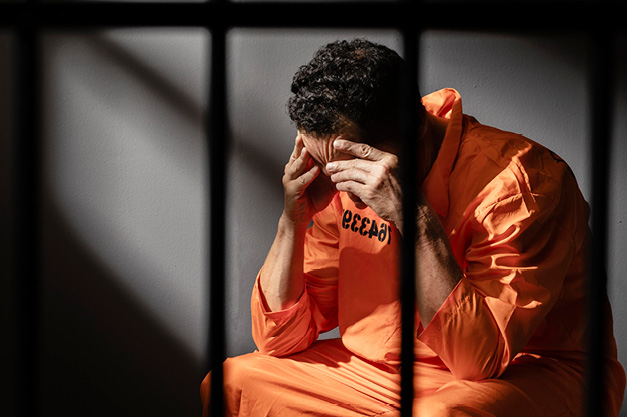
Wife got married while I was in prison
I was imprisoned for 7 years. After my release, I found my wife had gotten married to another man. I want to know what does the law say on this? What are my rights?
JM, Mtwara
We are so sorry to hear about your story. In Tanzania, marriage and matters related to it are governed by the Law of Marriage Act, Cap. 29 [R.E 2023] (the Act). Generally, this law prohibits a married woman from getting married to another man as per section 15(3) and 152 of the Act. Imprisonment alone cannot automatically end the marriage but it can be a good evidence that the marriage has broken down irreparably under section 107(2)(g) of the Act and, therefore, one can file a petition for divorce.
Section 107(2) lists a number of matters which can be accepted by the Court that the marriage has broken down irreparably. Such matters include imprisonment of the respondent for life or a term of not less than 5 years. Besides, regard should be to both the length of the sentence and the nature of the offence for which it was imposed as evidence. It should however be noted that proof of that imprisonment does not entitle the petitioner as of right to a decree. This implies that the Court will look at all facts and circumstances before it grants divorce decree to the petitioner.
In these circumstances, if a wife contracted another marriage without obtaining divorce decree from the Court citing imprisonment as evidence of irreparable breakdown of marriage, you may have a recourse against your wife. Your lawyer can, upon analysis of all surrounding circumstances, guide your further.