
Q&A – 4 May 2026
Sharing of CV
I submitted my CV to a recruitment firm in October 2024 for a legal assistant position. Shortly thereafter, I was invited for an interview, but nothing materialised from that process. A few weeks later, I received a call from a different entity stating that they had received my CV and were considering me for a position. This came as a surprise, as I had not applied to that entity. It later emerged that my CV had been shared by the recruitment firm. Is such sharing of a CV permissible under Tanzanian law?
IK, Mwanza
This is a very practical concern, particularly in the current employment environment where the use of digital recruitment platforms and third-party engagements is increasingly common. Under the Personal Data Protection Act [Cap. 44 R.E 2023] (the Act), a data controller is required to ensure that personal data is processed lawfully, fairly and transparently, and that it is collected for explicit, specified and legitimate purposes and not further processed in a manner incompatible with those purposes. In the context of employment, where a CV is submitted for a particular job application, the purpose of collection is ordinarily limited to that specific recruitment process. The Act further places limitations on the disclosure of personal data, and restricts a data controller from disclosing such data to third parties without a lawful basis. Accordingly, sharing a CV with a third party for a different opportunity, without informing the data subject or establishing a proper legal basis, is likely to amount to unlawful disclosure of personal data.
In addition, the Personal Data Protection (Personal Data Collection and Processing) Regulations, 2023 (GN No. 449C of 2023) reinforce the principles of lawfulness and purpose limitation, requiring that personal data be processed only for the purpose for which it was collected and in a lawful manner. While there might be instances where such sharing could be justified, for example, where the data subject has provided prior consent or where the terms governing submission of the CV expressly allow broader circulation, this must be clearly established. It cannot be presumed. In the circumstances described, where there is no indication of consent, disclosure, or any lawful basis, there is a strong basis to argue that the data subject’s rights have been infringed. The law further provides a remedy, where a person may lodge a complaint with the Personal Data Protection Commission which is empowered to investigate and take appropriate enforcement action in case there is a violation of personal data protection principles.
Access to son denied
My ex-girlfriend and I were blessed with a baby back then. Our son is still in the custody of his mother’s family. I have been sending money whenever needed for the upkeep of my son. However, strangely, that family has been denying me access to my son simply because I did not pay the dowry. I have tried all possible means but they have remained adamant with their decision. What does the law say about this?
JM, Shinyanga
We are sorry to hear about your story. It should be noted that children and their affairs in Tanzania are governed by the law of the Child Act. The law strictly requires that whatever kind of decision made about a child, the attention should be paid to the best interests of the child. According to section 6(1) of the Law of the Child Act, it is in the best interest of the child to know their biological parents. As such, denying a father access to his son without any legal ground is as good as judging a child for the social wrongs done by the parents. It is already settled in Tanzania that a child should not be a victim of the nature of the relationship their parents had before the child was born. Hence, you have the right to see your child regardless of whether or not dowry was paid. Of course the other option would be to pay the dowry to avoid any confrontation. You can consult your lawyer for further guidance.
Salon photo on social media
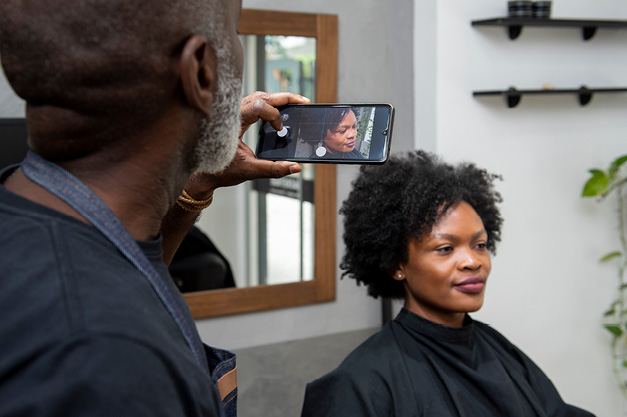
I recently went to a salon to have my hair braided. After the process, the salon staff asked to take photographs of me. I understood this to be for internal purposes or to show other clients at the salon. Later that evening, my husband forwarded me a post from the salon’s Instagram page, where my photograph had been published with the caption ‘satisfied customer’ together with the price. This came as a surprise, as I had not been informed that the photographs would be used publicly. I contacted the salon requesting that the photograph be taken down, but the owner declined, stating that I had agreed to the photographs being taken and that they could not remove them as they had engaged a professional photographer. Is the salon permitted to use my photograph in this manner?
SM, Dar es Salaam
The circumstances you have described raise questions as to the scope of the consent given at the time the photographs were taken. Under the Personal Data Protection Act [Cap 44 R.E 2023], personal data is required to be processed lawfully, fairly and transparently, and only for a specific and legitimate purpose. While you may have agreed to the taking of photographs, it is necessary to consider whether that understanding extended to their publication on a public platform such as social media. Consent, in this context, is expected to be clear and specific to the intended use.
The publication of your photograph, particularly together with pricing information, may also amount to disclosure of personal data to the public, which generally requires a proper legal basis. In addition, the Personal Data Protection (Personal Data Collection and Processing) Regulations, 2023 (GN No. 449C of 2023) require that personal data be used only for the purpose for which it was collected. A shift from internal or limited use to public marketing may therefore raise compliance concerns. In the absence of a clear indication that consent was obtained for such use, there may be a basis to challenge the salon’s actions.
The law further provides a remedy where one can lodge a complaint with the Personal Data Protection Commission. Given that such matters often depend on the specific facts, particularly what was communicated at the time the photographs were taken, it is advisable to consult your lawyer for further guidance.