
Q&A – 15 December 2025
Taking back my kidney after divorce
My wife was critically ill and needed a kidney transplant. Out of love, I donated mine. During the time of her sickness, I felt so lonely and fell into the trap of another woman whom I don’t love. I confessed to my wife about this, thinking it was the right thing to do. However, I regret this now. My wife has refused to forgive me. Soon after recovering, she filed for divorce. I feel betrayed and want my kidney back. Is there any legal way to reclaim it?
KL, Arusha
This is a deeply emotional situation, but sometimes the law does not align with our emotions. According to medical guidelines that we have reviewed, organ donation is treated as a voluntary and irrevocable gift in Tanzania. This principle is also observed in other countries.
Once you donate an organ, it becomes the recipient’s property, and there is no legal mechanism to demand its return. The Law of Marriage Act, Cap. 29 [R.E. 2023] governs divorce proceedings, focusing on the division of matrimonial property, custody of children, and maintenance. It does not extend to undoing medical procedures or reclaiming donated organs. Medical ethics also forbid such an idea. Surgeons perform transplants under strict ethical rules, and removing a transplanted organ after donation would not only be medically impossible but also legally and morally unacceptable. The betrayal you feel is real, but the Courts cannot undo biology. What you can pursue is a fair divorce settlement under the Law of Marriage Act, by ensuring that property and parental responsibilities (if any) are divided equitably. The kidney, however, remains with your wife permanently. Consult your lawyer for further guidance.
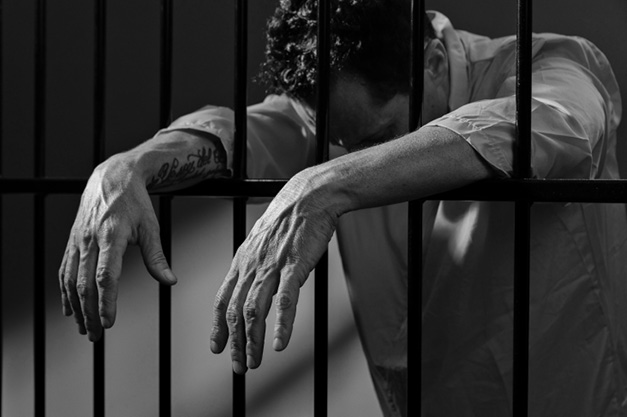
Paying to get out of prison
My father was sentenced to serve three years in prison for a non‑violent offence. The magistrate sentenced him to pay a fine, with a default clause that, if he failed to pay, he would serve three years in prison. He was unable to pay and began serving the default imprisonment. He has already served one year. Recently, I visited him, and he told me that he overheard fellow inmates saying that it is possible to convert his custodial sentence into a fine and obtain release. Is this true? Can he pay money to replace the remaining prison term? He has asked me to follow up with a lawyer and give him a reply soon.
HJ, Dar es Salaam
We regret your father’s imprisonment. The Penal Code, Cap. 16 [R.E. 2023] and the Criminal Procedure Act, Cap. 20 [R.E. 2023] provide Courts with discretion at the time of sentencing to impose either a fine, imprisonment, or both, depending on the seriousness of the offence. Once you are serving a custodial sentence, the law does not permit you to ‘buy’ your freedom by paying money unless your imprisonment was due to a default in paying a fine imposed during the sentencing. This kind of imprisonment applies where a person was convicted of an offence with the option to pay a fine or serve imprisonment. In that case, you may pay the fine even after commencing the sentence, and the imprisonment would then be terminated. This is precisely what section 29(e) of the Penal Act provides: the imprisonment imposed in default of payment of a fine shall cease when the fine is either paid or levied by process of law.
Remember, if the sentence was purely custodial (imprisonment only, no acceptable fine option), then section 29 does not apply. A prisoner may not later request that the sentence be converted to a fine. What is possible, however, are mechanisms such as parole, remission, or presidential pardon. The Prisons Act [Cap. 58 R.E. 2023] allows remission of sentences for good behaviour, and parole may be granted under certain conditions.
Additionally, the President of Tanzania has constitutional powers to pardon or commute sentences. These are not automatic rights but privileges that require formal applications through prison authorities or the parole board. Therefore, if what you said about your father is true, the correct path is to seek conversion into a fine as per the law. Consult a lawyer for guidance.
Paying for a ghost student
I paid tuition fees directly to the university for three years, believing my child was enrolled. I recently discovered that my child dropped out in the first year and never attended classes. Shockingly, the university never informed me until graduation time. I am so disappointed and want my money back. Since my child was never a student there, why didn’t the university notify me earlier?
AA, Iringa
We are sorry to hear this. Your question raises serious questions about parenting challenges and transparency in higher education. Universities in Tanzania operate under the oversight of the Tanzania Commission for Universities (TCU), established under the Universities Act, Cap. 346 [R.E. 2023]. However, refunds and fee policies are typically governed by each university’s internal regulations. We have limited facts regarding your case, so we cannot provide a specific answer.
Generally, universities require students to formally withdraw within a specified period to qualify for refunds. If your child did not submit withdrawal paperwork, the university may argue that fees were properly charged because the student remained on the books. Regarding the University informing you of your child’s absence, universities generally communicate directly with the student because, legally, the student is the contracting party. Even if a parent or sponsor pays fees, the institution is not automatically obliged to report the student’s absence to the parent unless the parent is formally recognized as the sponsor in the student’s records. Nonetheless, even where a sponsor is recorded, the Universities are not legally bound to provide updates on attendance unless a specific agreement exists.
That said, if the university continued to accept tuition for 3 years while knowing the student was inactive, you may have legitimate grounds to challenge the institution. You can lodge a complaint with the TCU, which has the authority to investigate the university. Consult your lawyer for further guidance.